
How to Choose a Commercial Pool Equipment Manufacturer:
What Every Aquatic Professional Should Know
Updated11/24/26
Choosing commercial pool equipment involves more than comparing products and prices. The manufacturer behind that equipment can significantly affect its performance, durability, maintenance requirements, and long-term value.
Whether you're building a new aquatic facility, renovating an existing pool, or replacing aging equipment, knowing what to look for in a commercial pool equipment manufacturer can help you make a more informed investment.
Not all pool equipment is manufactured to the same standards. Understanding the differences can save your facility time, money, and unnecessary headaches down the road.
Quick Answer: What Should You Look for in a Commercial Pool Equipment Manufacturer?
A quality commercial pool equipment manufacturer should offer durable materials, proven manufacturing processes, equipment designed for commercial use, appropriate safety and compliance documentation, and dependable long-term product support.
The right manufacturer should also understand the unique demands of commercial aquatic facilities and provide equipment that meets your project's specific requirements.
Price matters, but it shouldn't be the only consideration. The lowest initial purchase price doesn't always translate to the lowest long-term cost.
At a Glance: What Matters Most?
| What to Evaluate | Why It Matters |
|---|---|
| Manufacturing quality | Influences durability, performance, and equipment lifespan |
| Materials and construction | Determines how equipment withstands moisture, chemicals, and frequent use |
| Commercial-grade design | Helps equipment withstand demanding aquatic environments |
| Product selection | Can simplify purchasing and project coordination |
| Customization capabilities | Provides solutions for unique facility layouts and requirements |
| Compliance and standards | Helps ensure equipment meets applicable accessibility and performance requirements |
| Long-term support | Makes maintenance, repairs, and replacement parts easier to manage |
| Manufacturer experience | Demonstrates familiarity with commercial aquatic applications |
What You'll Learn
This guide explains how to evaluate commercial pool equipment manufacturers, what questions to ask before purchasing, and how to recognize the difference between a low initial price and a strong long-term investment.
______________________________________________________
1. Manufacturing Quality: Look Beyond the Finished Product
Two pieces of commercial pool equipment may look nearly identical, but their construction can tell very different stories.
Manufacturing quality begins long before a product reaches the pool deck.
Start with the materials
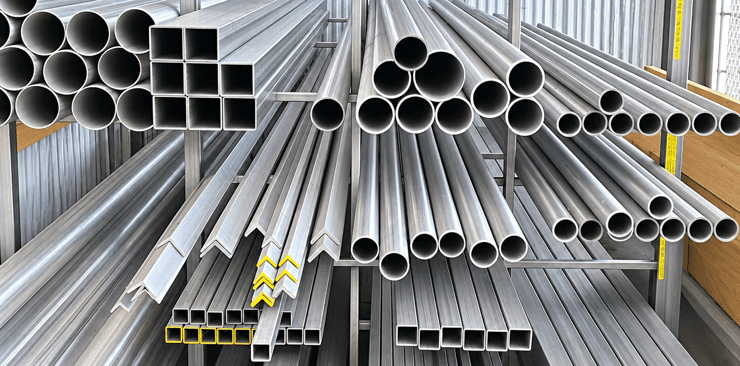
Commercial aquatic environments are demanding. Equipment is routinely exposed to moisture, pool chemicals, cleaning products, and frequent physical contact.
For stainless steel equipment, understanding the grade of steel being used is particularly important.
-
304L stainless steel is commonly used in commercial aquatic equipment. Its low-carbon composition helps reduce the risk of sensitization during welding, which can otherwise compromise corrosion resistance near welded areas.
-
316L stainless steel contains molybdenum, which provides additional resistance to certain forms of corrosion, particularly in chloride-containing environments.
However, neither grade is completely corrosion-proof. Appropriate material selection, environmental conditions, fabrication quality, and ongoing maintenance all affect performance.
Ask manufacturers which grades of stainless steel they use and why those materials are appropriate for the intended application.
💡SpectrumAquatics has over 50 years of relationships with stainless steel mills across the USA. All of our stainless steel is 100% American.
Pay attention to construction!
Material selection is only part of the equation. How equipment is fabricated can directly impact its strength and service life.
For example, when evaluating stainless steel pool handrails or ladders, consider:
- Tubing diameter and wall thickness: These affect structural performance and should match the intended use.
- Weld quality: Proper welding techniques help produce strong, consistent joints while limiting defects that could contribute to corrosion.
- Surface finishing: Smooth, properly finished surfaces are easier to clean and can help reduce areas where contaminants accumulate.
- Attachment methods: Anchors, mounting hardware, and connection points should be designed for the expected loads and installation conditions.
A polished exterior can make equipment look impressive, but appearance alone doesn't establish manufacturing quality.
Why finishing processes matter
Stainless steel receives much of its corrosion resistance from a thin, naturally forming chromium-rich passive layer.
Fabrication and welding can introduce surface contamination, heat tint, and other conditions that may reduce corrosion resistance if they aren't properly addressed.
Processes such as electropolishing and passivation can help improve the surface condition of stainless steel when correctly specified and performed.
A Real-World Manufacturing Example
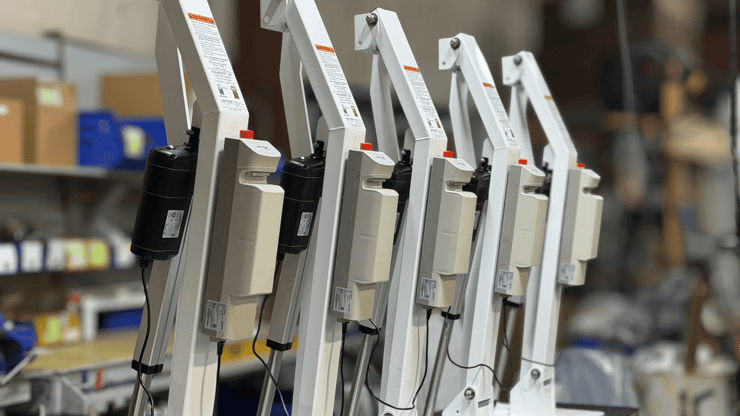
At Spectrum Aquatics' manufacturing facility in Missoula, Montana, stainless steel fabrication is supported by a 3-Step Process:
- Electropolishing: An electrochemical process that removes a controlled amount of surface material, helping smooth the stainless steel surface and remove certain surface imperfections.
- Passivation: A chemical treatment that removes free iron and other surface contaminants, supporting the formation of a protective passive layer.
- Spectra-Shield Coating: Spectrum's proprietary protective finishing step, applied as part of its stainless steel finishing process.
This approach demonstrates why it's important to look beyond the appearance of a finished product and understand how it was manufactured.
💡Pro Tip: Ask manufacturers to explain their finishing processes. A reputable manufacturer should be able to describe what those processes accomplish and how they contribute to the finished product's performance.
2. Commercial vs. Residential Pool Equipment: Know the Difference
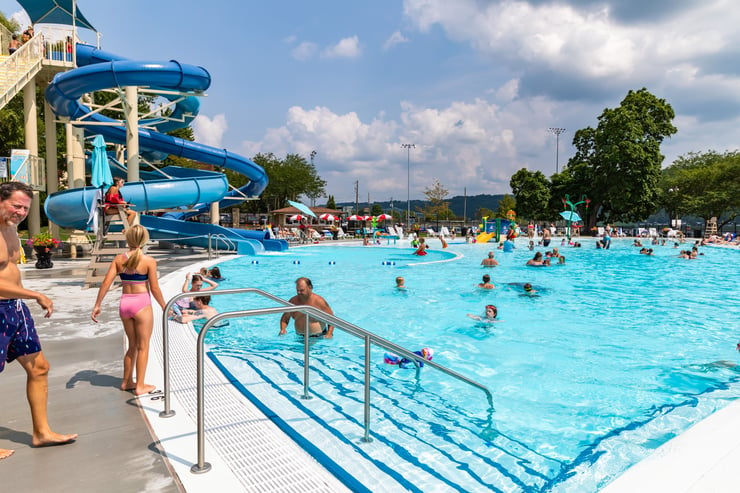
Equipment that performs well in a backyard pool may not be appropriate for a municipal aquatic center, university natatorium, or heavily used commercial facility.
The difference often comes down to how the equipment is designed to be used.
Residential equipment generally experiences less frequent use and may be designed for different loading conditions, installation requirements, and operating environments.
Commercial pool equipment must be selected for the demands of the facility where it will be installed.
Built for constant use
Consider the demands placed on equipment at a busy aquatic facility.
A pool ladder may be used hundreds of times throughout a single day. Lifeguard chairs are repeatedly climbed, occupied, and cleaned. Starting blocks experience concentrated loads from athletes performing powerful starts.
These are not occasional-use applications.
Commercial-grade equipment should be designed with appropriate structural strength, materials, mounting systems, and maintenance requirements for its intended environment.
Why the difference matters
Equipment that isn't suitable for commercial use may require more frequent repairs or premature replacement.
It can also introduce safety concerns if the product isn't designed for the loads or conditions it encounters.
Myth vs. Fact
Myth: If equipment is made from stainless steel, it's automatically suitable for a commercial swimming pool.
Fact: Stainless steel grade alone doesn't determine whether equipment is appropriate for commercial use. Construction quality, structural design, installation, environmental conditions, and intended use all matter.
Ask Yourself: Was this equipment specifically designed for a commercial aquatic facility, or is it simply being marketed for commercial use?
______________________________________________________
3. Product Selection: Why Working with Fewer Suppliers Can Make Sense
Commercial aquatic facilities require a surprising amount of equipment.
Depending on the facility, that may include pool ladders, grab rails, ADA pool lifts, lifeguard chairs, starting blocks, diving equipment, pool covers, and recreational features.
When these products come from multiple manufacturers, coordinating specifications, orders, deliveries, and product support can become more complicated.
The benefits of consolidating equipment purchases
Working with a manufacturer that offers multiple commercial pool equipment categories can provide several advantages.
-
Simplified purchasing
-
Fewer suppliers can mean fewer purchase orders, vendor contacts, and administrative processes.
-
-
More consistent product specifications
-
Purchasing related equipment from one manufacturer may make it easier to coordinate finishes, materials, and customization requirements.
-
-
Streamlined project coordination
-
A manufacturer familiar with multiple equipment categories may be better positioned to help coordinate product selections and installation requirements across a project.
-
-
A single point of contact
-
When questions arise about orders, maintenance, or replacement parts, having fewer manufacturers to contact can simplify communication.
-
4. Customization: When Standard Equipment Isn't the Right Fit
Not every aquatic facility is built the same.
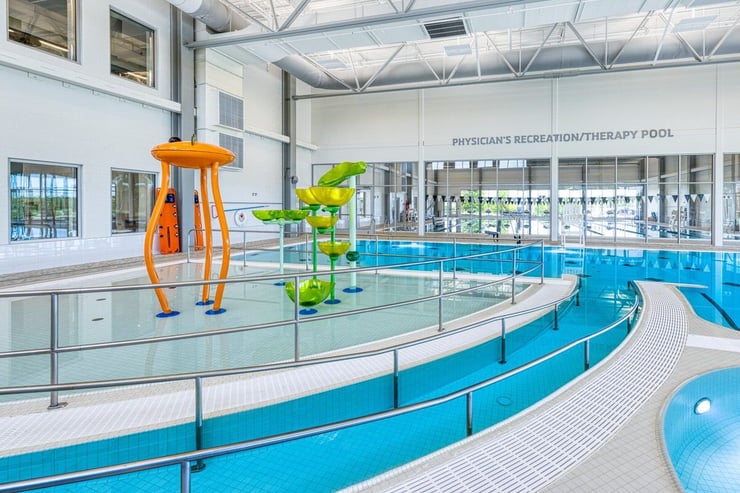
Pool deck dimensions, existing anchor locations, water depths, architectural features, and operational requirements can vary significantly from one project to another.
Standard equipment may not always provide the best solution.
What customization capabilities should you look for?
Depending on the equipment category, useful customization options may include:
- Custom rail and ladder configurations
- Alternative mounting or anchoring arrangements
- Stainless steel material and tubing options
- Powder-coated finishes and custom colors
- Branding and logo applications
- Equipment designed around unique facility dimensions
The important question isn't simply whether a manufacturer offers customization.
It's whether the manufacturer has the engineering knowledge and fabrication capabilities to develop a solution appropriate for the application.
Custom manufacturing can extend the life of an existing facility
Customization isn't limited to new construction.
For renovation projects, a custom-fabricated handrail or specially configured piece of equipment may allow a facility to work around existing conditions without making extensive structural changes.
For example, a pool with unusual deck geometry may require a custom rail configuration to provide appropriate access while accommodating existing anchors or surrounding features.
In these situations, working directly with a manufacturer that understands commercial aquatic equipment can be particularly valuable.
💡Common Mistake: Assuming a standard product can be modified in the field without consulting the manufacturer.
Field modifications may affect structural performance, warranties, or compliance. Always confirm whether a proposed modification is appropriate before proceeding.
5. Compliance and Standards: Know What Applies to Your Facility
Commercial aquatic facilities may be subject to multiple regulations, codes, and equipment standards.
Requirements depend on the facility's location, intended use, and the type of equipment being installed.
A manufacturer should understand the standards applicable to its products and be able to provide appropriate documentation.
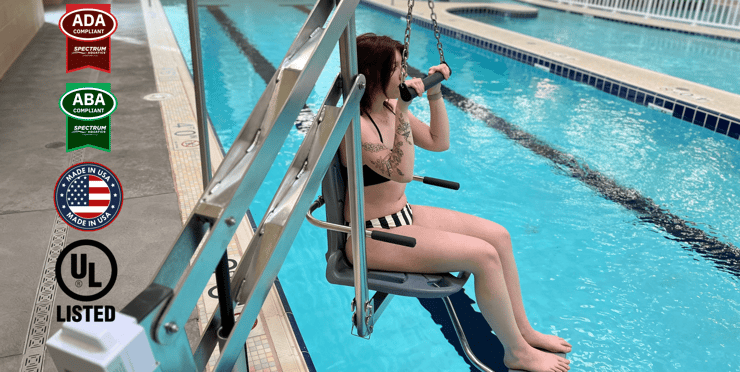
ADA accessibility requirements
For many public and commercial aquatic facilities in the United States, the Americans with Disabilities Act (ADA) establishes accessibility requirements.
For swimming pools, accessible entry methods may include pool lifts, sloped entries, transfer systems, and other permitted methods, depending on the facility and applicable requirements.
When evaluating an ADA pool lift, important considerations include its lifting capacity, operating requirements, installation configuration, and applicable ADA technical specifications.
A manufacturer should be able to help you identify the relevant product specifications and documentation.
However, selecting an ADA-compliant product doesn't automatically make the entire installation compliant. The surrounding deck space, installation location, and other site conditions must also be considered.
Competitive swimming equipment
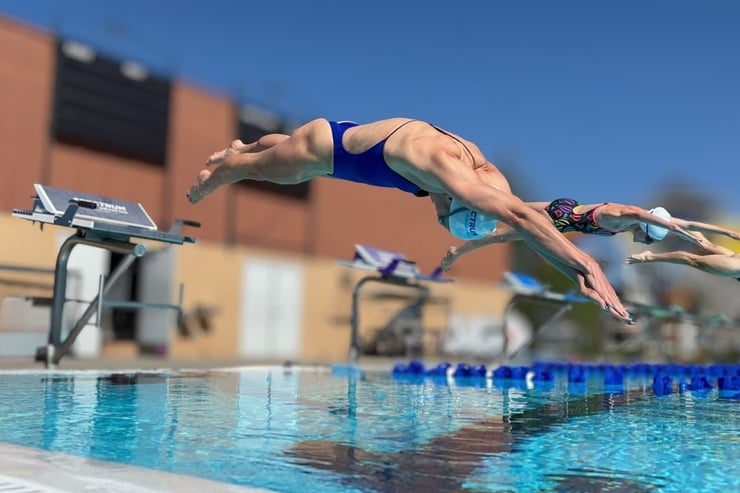
Competitive swimming facilities should evaluate equipment based on the requirements of the organizations governing their events.
Depending on the application, these may include:
- World Aquatics
- USA Swimming
- NCAA
- NFHS
Starting blocks, for example, may be subject to requirements involving platform dimensions, height, water depth, and other performance or installation criteria.
Requirements can vary by governing body and event.
Other applicable standards
Depending on the product, additional safety standards, electrical certifications, building codes, or local health department requirements may apply.
For example, certain powered pool lifts may carry third-party safety certifications relevant to their electrical and mechanical construction.
💡Pro Tip: Ask manufacturers for product specifications, installation instructions, and applicable compliance documentation before finalizing your purchase.
Never assume that a product's general compliance claim means it is suitable for every installation.
___________________________________________________
6. Long-Term Support: What Happens After Installation?
A manufacturer's responsibility shouldn't necessarily end when equipment leaves the factory.
Commercial pool equipment is a long-term investment, and even well-manufactured products require proper maintenance.
Before choosing a manufacturer, find out what support will be available after installation.
Replacement parts
Can you purchase replacement components without replacing the entire product?
For equipment such as pool lifts, starting blocks, and other products with serviceable components, replacement-part availability can significantly affect long-term ownership costs.
Maintenance information
Does the manufacturer provide clear maintenance instructions?
Proper cleaning, inspections, and routine maintenance can help identify potential issues before they become major problems.
This is especially important for stainless steel equipment, which still requires appropriate care despite its corrosion-resistant properties.
Warranty coverage
Review warranty terms carefully.
Look beyond the warranty length and understand what is covered, what is excluded, and whether specific maintenance requirements apply.
Technical support
When equipment needs attention, can you reach someone who understands the product?
Access to knowledgeable technical support can help facilities troubleshoot problems and reduce unnecessary downtime.
💡Did You Know? The purchase price of commercial pool equipment represents only one part of its total cost. Maintenance expenses, replacement components, repair labor, and potential downtime can all affect the overall cost of ownership. A less expensive product may ultimately cost more if it requires frequent service or early replacement.
___________________________________________________
7. Manufacturer Experience: Why Industry Knowledge Matters
Manufacturing experience can be an important indicator of a company's familiarity with commercial aquatic applications.
However, years in business alone shouldn't determine your decision.
Consider the manufacturer's experience with facilities similar to yours.
A competitive swimming facility may have different equipment requirements than a municipal recreation center or therapeutic aquatic facility.
Ask whether the manufacturer has worked with comparable projects and whether it can provide examples of relevant installations.

The value of domestic manufacturing
For facilities that prioritize American-made products, domestic manufacturing may be an important consideration.
Working with a U.S. manufacturer can also offer practical advantages, depending on the company and product, such as easier communication with manufacturing teams and access to domestic technical support.
Spectrum Aquatics, for example, has manufactured commercial aquatic equipment in Missoula, Montana, for decades.
Its manufacturing operations provide a real-world example of the craftsmanship and fabrication expertise involved in producing commercial pool equipment in the United States.
Regardless of where a manufacturer is located, the most important factors remain product quality, appropriate specifications, and dependable support.
Quick Decision Guide: Comparing Commercial Pool Equipment Manufacturers
Use this guide when evaluating potential suppliers.
| If Your Priority Is... | Look for a Manufacturer That... |
|---|---|
| Long-term durability | Explains its materials, construction methods, and finishing processes |
| Commercial performance | Designs products for the intended facility and expected use |
| Easier purchasing | Offers several relevant equipment categories |
| Custom solutions | Provides engineering and fabrication support |
| Compliance | Supplies documentation for applicable standards |
| Lower lifetime costs | Offers serviceable products and replacement parts |
| Reliable maintenance | Provides clear care instructions and technical support |
| American manufacturing | Can verify where its products are manufactured |
8. Questions to Ask Before Choosing a Commercial Pool Equipment Manufacturer
Before making a purchasing decision, ask these questions.
Manufacturing and materials
- What materials are used, and why were they selected?
- What stainless steel grades and tubing specifications are available?
- What manufacturing and finishing processes are used?
- Is the equipment designed specifically for commercial aquatic applications?
Product selection and customization
- Can the manufacturer supply multiple equipment categories for my project?
- Are custom configurations available?
- Can the manufacturer accommodate existing anchors or unusual installation conditions?
- Is technical assistance available for custom applications?
Compliance and installation
- Which standards apply to the equipment?
- Can the manufacturer provide relevant compliance documentation?
- Are installation instructions and technical drawings available?
- Are there site-specific requirements I need to consider?
Service and long-term ownership
- Are replacement parts available?
- Are parts easily available? How do you order them?
- What maintenance does the equipment require?
- What does the warranty cover?
- Who do I contact for technical support?
- What is the expected total cost of ownership?
A manufacturer that can answer these questions clearly is better positioned to help you make an informed purchasing decision.
9. Frequently Asked Questions About Commercial Pool Equipment Manufacturers
-
What should I look for when choosing a commercial pool equipment manufacturer?
-
Look for durable materials, quality construction, commercial-grade design, appropriate compliance documentation, and dependable product support. Also consider the manufacturer's experience with facilities similar to yours and its ability to accommodate your project's requirements.
-
-
What is the difference between commercial and residential pool equipment?
-
Commercial pool equipment is selected and designed for the demands of public, institutional, or heavily used aquatic facilities. These applications may require greater structural strength, different installation methods, more durable components, and compliance with additional standards compared with typical residential applications.
-
-
Is 304L or 316L stainless steel better for commercial swimming pools?
-
Both 304L and 316L stainless steel are used in commercial aquatic equipment. The appropriate choice depends on environmental conditions, equipment design, and exposure to corrosive substances. 316L generally provides greater resistance to chloride-related corrosion, but neither grade eliminates the need for proper fabrication, finishing, and maintenance.
-
-
Why is stainless steel finishing important for pool equipment?
-
Manufacturing processes can leave surface contamination or imperfections that affect corrosion resistance. Appropriate finishing methods, including electropolishing and passivation, can improve surface condition and help support stainless steel's protective passive layer.
-
-
Is American-made commercial pool equipment better?
-
Manufacturing location alone doesn't guarantee product quality. American-made equipment may offer advantages for facilities prioritizing domestic manufacturing, communication, or sourcing requirements. Buyers should still evaluate materials, construction, performance, and support.
-
-
Can I buy all my commercial pool equipment from one manufacturer?
-
Some manufacturers like Spectrum Aquatics offer multiple categories of commercial aquatic equipment, allowing facilities to consolidate purchases. This can simplify purchasing and coordination, although specialized manufacturers may still be appropriate for certain products or projects.
-
-
Can commercial pool equipment be customized?
-
Yes. Depending on the manufacturer, customization may include rail configurations, mounting arrangements, finishes, colors, dimensions, and branding. Custom equipment should be designed and evaluated for its intended application.
-
-
How do I know whether commercial pool equipment meets ADA requirements?
-
Review the manufacturer's product documentation and compare the equipment's specifications with the applicable ADA requirements. The installation must also satisfy relevant site-specific accessibility requirements. A compliant product alone does not guarantee a compliant facility.
-
-
What is the most important factor when purchasing commercial pool equipment?
-
There isn't one factor that applies to every purchase. Durability, safety, compliance, maintenance, and long-term support should all be considered alongside the initial price. The best choice is equipment that meets the facility's requirements and provides dependable performance over time.
-
Choose a Manufacturer, Not Just a Product
Commercial pool equipment is an investment in the long-term operation of your aquatic facility.
While price and appearance may influence purchasing decisions, understanding how equipment is manufactured and supported can help you identify products that deliver better value over time.
Take the time to ask questions. Compare materials and construction methods. Understand the applicable standards, and consider what happens after the equipment is installed.
The right manufacturer should provide more than a product that meets your immediate needs. It should give you confidence in the equipment you're purchasing and the support available throughout its service life.
At Spectrum Aquatics, we believe choosing the right equipment starts with understanding what goes into making it. From our manufacturing facility in Missoula, Montana, we produce commercial aquatic equipment designed for the demands of facilities nationwide.
With a broad selection of equipment for competitive swimming, accessibility, recreation, and pool decks, we make purchasing and maintaining commercial aquatic equipment easier.
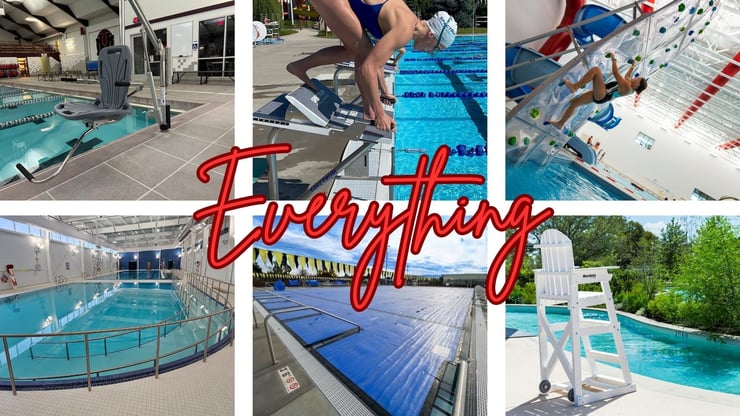
Spectrum Aquatics has Everything Your Pool Needs in One Place!
