
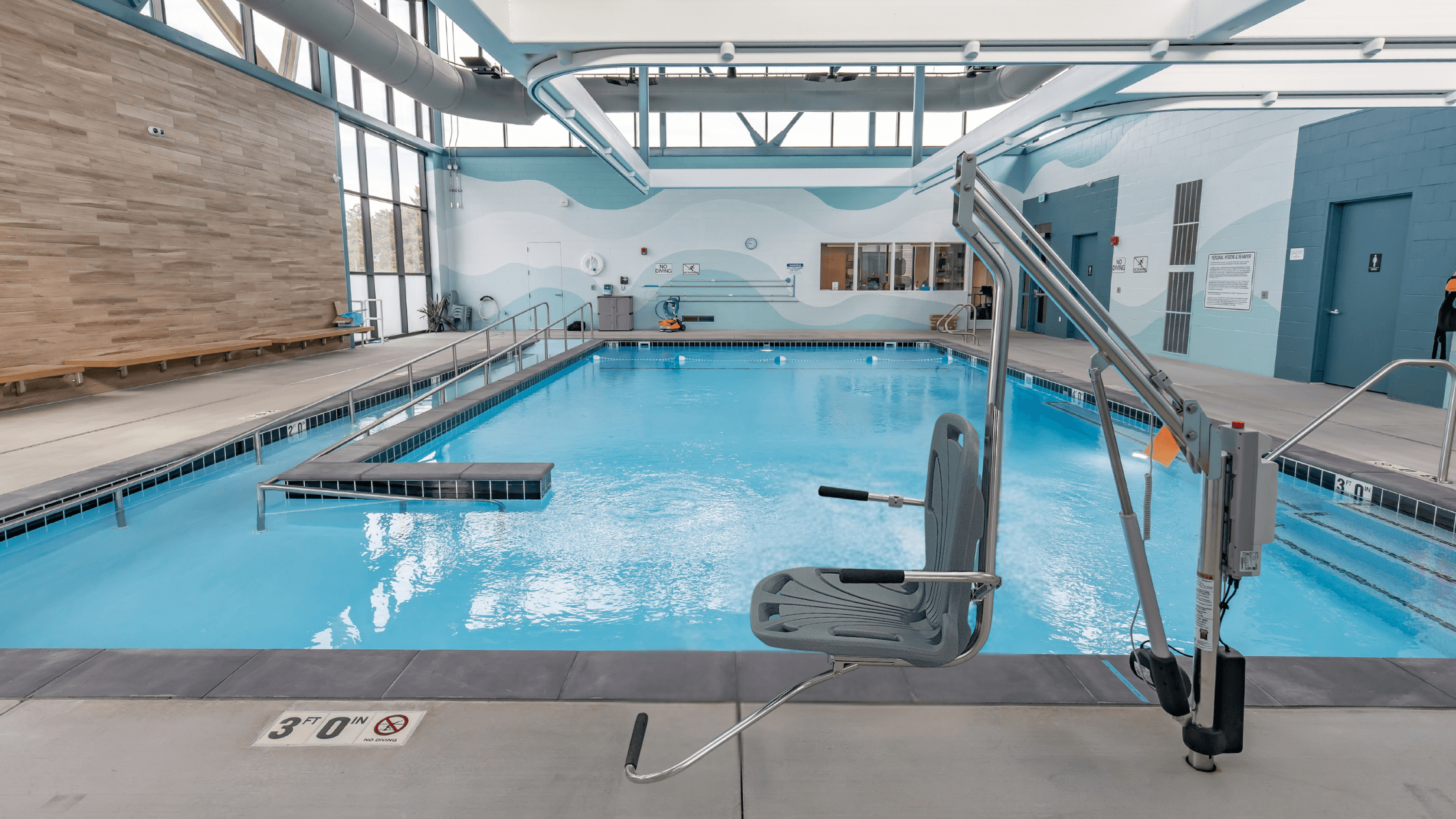
How Many ADA Pool Lifts Does My Pool Need?
Understanding ADA Requirements for Pools, Spas, and Multiple Bodies of Water
Date: July 2026
In most commercial facilities, every separate body of water requires its own ADA-compliant accessible means of entry.
For many pools, that means installing one Spectrum Aquatics ADA Pool Lift. Larger pools may require two accessible means of entry. Spas also require their own accessible means of entry.
The ADA does not allow facilities to roll one portable lift between multiple bodies of water to satisfy accessibility requirements for newly constructed facilities. Accessible entry must be available whenever each body of water is open to the public.
At a Glance
| Facility | ADA Requirement |
|---|---|
| Pool under 300 linear feet | One accessible means of entry (lift or sloped entry) |
| Pool over 300 linear feet | Two accessible means of entry; one must be a lift or sloped entry |
| Spa | One accessible means of entry |
| Wading Pool | One sloped entry (pool lift not permitted) |
| Two separate pools | Each pool requires its own accessible entry |
| Pool + Spa | Pool and spa each require their own accessible entry |
What You'll Learn
After reading this guide you'll understand:
- What is ADA Compliance
- What is the Architectural Barriers Act (ABA)
- How the ADA determines the number of required pool lifts
- Why each body of water is treated separately
- When one lift is enough and when it isn't
- How portable lifts fit into ADA compliance
- Which Spectrum Aquatics lift is best for your facility
Facility owners often ask: "Can we just buy one lift and move it between our competition pool and therapy pool?"
Or..."Can one lift serve both the pool and the spa?"
The answer is usually no.
The ADA was written to ensure people with disabilities have the same opportunity to enjoy aquatic facilities whenever they are open, not only when staff are available to move equipment.
________________________________________________
ADA Pool Lift Requirements: A Summary of the Law
The Americans with Disabilities Act (ADA) requires newly constructed and altered public swimming pools, spas, and aquatic facilities to provide accessible means of entry and exit so individuals with disabilities can independently enjoy the water.
The ADA Standards for Accessible Design establish these requirements under Section 242 (Swimming Pools, Wading Pools, and Spas) and the technical specifications in Section 1009.
The Americans with Disabilities Act | ADA.gov
Here are the key requirements every facility owner should understand:
- Pools with less than 300 linear feet of pool wall must provide at least one accessible means of entry, which must be either a pool lift or a sloped (zero-entry) entrance.
- Pools with 300 linear feet or more must provide two accessible means of entry. One must be a pool lift or sloped entry, while the second may be another approved accessible entry, such as a transfer wall, transfer system, accessible pool stairs, or an additional pool lift.
- Spas must provide at least one accessible means of entry, which may be a pool lift, transfer wall, or transfer system.
- Wading pools require a sloped entry. A pool lift is not an acceptable substitute for a wading pool.
- Each separate body of water is evaluated independently. A competition pool, therapy pool, leisure pool, and spa are each considered separate bodies of water and generally require their own accessible means of entry.
- Accessible equipment must be available whenever the pool is open. For most newly constructed facilities, one portable lift cannot simply be moved between multiple pools to satisfy ADA requirements.
- Pool lifts must also meet the ADA's technical design requirements, including minimum lifting capacity, clear deck space, seat configuration, water submersion depth, and operability.
The purpose of these requirements is simple: to remove architectural barriers and provide people with disabilities equal, independent access to aquatic facilities.
⭐Expert Tip
ADA compliance isn't just about purchasing a pool lift; it's about selecting the right type, quantity, and placement of accessible equipment based on your facility's design and ensuring it's available whenever your guests need it.
________________________________________________
What Are Architectural Barriers?
Architectural barriers are physical features that prevent people with disabilities from independently accessing or using a building, facility, or public space.
ABA Standards | U.S. Access Board
In aquatic facilities, these barriers can make it impossible or unsafe for someone with limited mobility to enter, exit, or enjoy the water without assistance.
Why This Matters
The Americans with Disabilities Act (ADA) was created to ensure people with disabilities have equal access to public accommodations, including swimming pools, spas, and aquatic recreation facilities.
Architectural barriers are obstacles that interfere with access.
For example:
- A building entrance that is only accessible by stairs
- A restroom without enough space for a wheelchair
- A doorway that is too narrow
- A pool with no accessible means of entry
While many people think of stairs as the most common architectural barrier, a pool without an ADA-compliant means of entry is also considered an architectural barrier for individuals who cannot safely use traditional pool ladders or stairs.
Why Removing Architectural Barriers Is So Important
Removing architectural barriers is about far more than meeting a legal requirement.
It allows people with disabilities to participate independently in swimming lessons, rehabilitation, exercise, competition, recreation, and family activities.
An accessible pool means:
- Greater independence for users
- Improved safety during pool entry and exit
- Equal access to aquatic programs
- A more welcoming environment for every guest
- Compliance with ADA Standards
For many people, an ADA-compliant pool lift isn't simply a convenience; it's the difference between participating in aquatic activities and being unable to enter the water at all.
⭐Expert Tip
One of the ADA's guiding principles is that accessibility should be available whenever a facility is open to the public, not only when staff members are available to assist.
That's why the ADA Standards require accessible means of entry for qualifying pools and spas and why facilities generally cannot rely on moving a single pool lift between multiple bodies of water to remove architectural barriers.
By eliminating these barriers through thoughtful design and properly selected accessibility equipment, aquatic facilities create spaces where everyone can safely and independently enjoy the water.
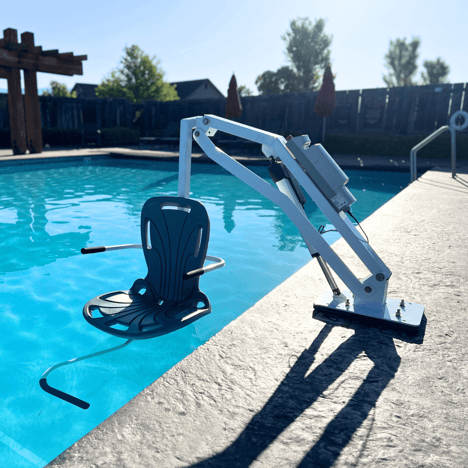
How the ADA and Architectural Barriers Work Together
The Americans with Disabilities Act (ADA) exists to remove architectural barriers that prevent people with disabilities from accessing and enjoying public facilities, including swimming pools.
For aquatic facilities, one of the most common architectural barriers is a pool that cannot be entered or exited independently by someone with a mobility disability. ADA-compliant pool lifts and other approved accessible means of entry are designed to eliminate that barrier.
Why This Matters
The ADA is a civil rights law that prohibits discrimination against individuals with disabilities and requires equal access to public accommodations.
How Pool Lifts Remove Architectural Barriers
The ADA recognizes that traditional pool ladders and steep stairways are not usable for everyone. To remove this barrier, the ADA Standards require accessible means of entry into qualifying pools and spas.
Depending on the facility, this may include:
- An ADA-compliant pool lift
- A sloped (zero-entry) entrance
- A transfer wall
- A transfer system
For many commercial aquatic facilities, an ADA-compliant pool lift is the most practical and cost-effective way to remove this architectural barrier while providing safe, independent access to the water.
⭐Expert Tip
Think of it this way: The architectural barrier is the obstacle. The ADA is the law that requires the obstacle to be removed. An ADA-compliant pool lift is one of the solutions that removes that barrier.
That's why the ADA doesn't simply require facilities to purchase a pool lift; it requires them to provide an accessible means of entry that allows individuals with disabilities to access each qualifying body of water independently and safely.
By understanding the relationship between the ADA and architectural barriers, facility owners can make informed decisions that improve accessibility, enhance the guest experience, and help maintain compliance with federal accessibility standards.
ADA Accessible Entry Requirements by Body of Water
| Body of Water | ADA Accessible Entry Required? | Acceptable Accessible Means of Entry | Spectrum Aquatics Recommendation |
|---|---|---|---|
| Swimming Pool (<300 Linear Feet) | Yes | One accessible means of entry. Must be either a pool lift or sloped (zero-entry) entry. | Motion Trek® BP350, Aqua Buddy® V2, Traveler®, Motion Trek® Portable 300, Aqua Buddy® V2 Portable, Gallatin®, Glacier® |
| Swimming Pool (300+ Linear Feet) | Yes | Two accessible means of entry. One must be a pool lift or sloped entry. The second may be another lift, transfer wall, transfer system, or accessible pool stairs. | Motion Trek® BP350 or Traveler® paired with another ADA-compliant accessible entry |
| Spa / Hot Tub | Yes | One accessible means of entry. May be a pool lift, transfer wall, or transfer system. | Aqua Buddy® V2, Traveler®, Motion Trek® BP350 |
| Wading Pool | Yes | Sloped (zero-entry) access only. Pool lifts are not permitted as the required means of entry. |
Custom Access Ramp Rails |
| Therapy Pool | Yes | Follow the same ADA requirements as other swimming pools based on pool size. | Aqua Buddy® V2, Motion Trek® BP350, Gallatin® |
| Leisure / Recreation Pool | Yes | Follow swimming pool requirements based on pool perimeter. | Motion Trek®, Traveler®, Aqua Buddy® V2 |
| Competition Pool | Yes | Follow swimming pool requirements based on pool perimeter. | Motion Trek® BP350 or Traveler® |
| Wave Pool / Activity Pool | Yes | Follow swimming pool requirements based on pool perimeter. | Motion Trek® BP350, Traveler® |
| Lazy River | Yes | Accessible means of entry required based on ADA standards applicable to the attraction. | Traveler® Long Reach |
💡 Easy Rule to Remember
Every separate body of water must be evaluated individually under the ADA.
If your facility has:
- ✅ Competition Pool
- ✅ Therapy Pool
- ✅ Recreation Pool
- ✅ Spa
...then each of those bodies of water must have its own required accessible means of entry. In most newly constructed facilities, you cannot rely on one pool lift to serve multiple bodies of water.
________________________________________________
What Counts as a Separate Body of Water?
This is where many facilities become confused.
Each of these is considered its own body of water:
- Competition Pool
- Recreation Pool
- Leisure Pool
- Therapy Pool
- Activity Pool
- Lap Pool
- Dive Well
- Spa
- Hot Tub
Each one must be evaluated independently under ADA requirements.
.png?width=649&height=365&name=V2%20Portable_Ergo%20Seat%20(2).png)
How many ADA pool lifts does my facility need?
It depends on the size and number of pools, not simply the number of lifts you own.
Why This Matters
ADA Standard 242 establishes requirements based on the linear feet of pool wall.
Pools Less Than 300 Linear Feet
These pools require:
✅ One accessible means of entry
That accessible entry must be either:
- A pool lift
- A sloped (zero-entry) entrance
For many commercial pools, this means installing a Spectrum Aquatics Motion Trek®, Aqua Buddy® V2, Traveler®, Gallatin®, Glacier®, or another ADA-compliant lift, depending on the application.
Pools Greater Than 300 Linear Feet
Larger pools require:
- Two accessible means of entry
At least one must be:
- Pool lift
- Sloped entry
The second may be:
- Transfer wall
- Transfer system
- Pool stairs
- Another pool lift
________________________________________________
Can One Lift Serve Multiple Pools?
Generally, no.
Why This Matters
If your facility has a competition pool or warm water therapy pool, those are two separate bodies of water. Each requires its own accessible means of entry.
The same applies to:
- Pool + Spa
- Indoor Pool + Outdoor Pool
- Recreation Pool + Lazy River
Each is evaluated separately under ADA Standards.
________________________________________________
What About Portable Pool Lifts? 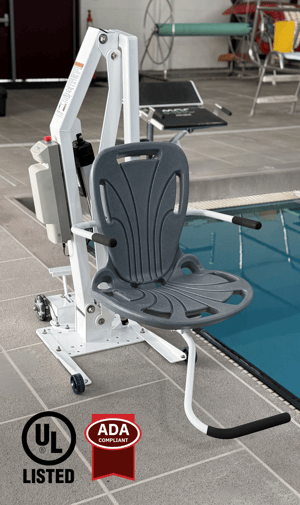
Portable lifts are an excellent solution for many facilities, but they are often misunderstood.
A portable lift can satisfy ADA requirements when it is anchored and available for the body of water it serves, and it meets the applicable accessibility requirements.
However, simply owning one portable lift that is wheeled between different pools during the day generally does not satisfy the accessibility requirements for new construction because the accessible means of entry must be available whenever that body of water is open. The ADA also notes that sharing accessible equipment between pools is generally not permitted except in limited situations involving existing public entities where providing equipment at each pool would create an undue burden.
This is why many facilities choose dedicated portable lifts, such as the Spectrum Aquatics Motion Trek® Portable or Aqua Buddy® V2 Portable, for each body of water they need to make accessible.
________________________________________________
What About Spas?
This surprises many facility owners. A spa is considered its own body of water.
If your facility has:
- Main Pool
- Spa
The spa requires its own accessible means of entry.
That may be:
- Pool lift
- Transfer wall
- Transfer system
One lift cannot be shared back and forth between the pool and spa in most newly constructed facilities.
________________________________________________
Choosing the Right Spectrum Aquatics Lift
Different facilities have different accessibility needs. Spectrum Aquatics offers several ADA-compliant solutions, including:
-
Motion Trek® BP350
-
Ideal for:
- Large municipal aquatic centers
- Recreation centers
- School facilities
- High-use aquatic centers
-
-
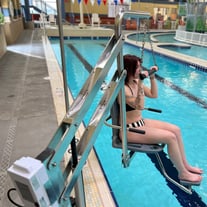
Traveler® BP500
-
Ideal for:
- Large municipal aquatic centers
- Facilities needing extended reach
- Pools with wider gutters
- Unique deck layouts
-
-
-
Aqua Buddy® V2
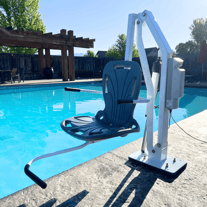
- Ideal for:
-
Hotels
-
Therapy pools
- Community pools
- Health clubs
-
- Ideal for:
-
Motion Trek® Portable
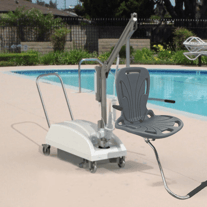
- Ideal for:
- Existing or new facilities
- Seasonal pools
-
Facilities requiring a portable anchored solution
- Ideal for:
-
Aqua Buddy® V2 Portable
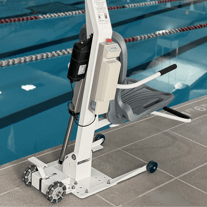
- Ideal for:
- Facilities needing portability with premium comfort
- Retrofits where a fixed lift is not practical
- Ideal for:
-
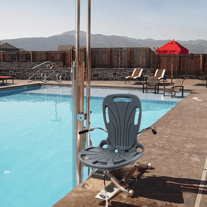
Gallatin® Water-Powered Lift
-
Perfect for facilities wanting:
-
No batteries
- No charging
- Minimal maintenance
- Maximum reliability
-
-
Common ADA Mistakes
| ❌ Mistake | ✅ Better Solution |
|---|---|
| Buying one lift for two pools | Provide an accessible entry for each body of water as required |
| Forgetting the spa | Evaluate the spa separately under ADA |
| Assuming portable means temporary | Portable lifts must still meet ADA requirements when used |
| Waiting until inspection | Plan accessibility during design |
| Choosing based only on price | Consider long-term reliability, maintenance, and user independence |
Frequently Asked Questions
Can one pool lift serve two pools?
Generally no. Each body of water must be evaluated independently, and accessible entry must be available whenever that body of water is open.
Does every spa require its own lift?
Not necessarily. A spa requires one accessible means of entry, which may be a pool lift, transfer wall, or transfer system.
Are portable lifts ADA-compliant?
Yes. When they meet ADA technical requirements and are anchored and available for the body of water they serve, portable lifts can be ADA-compliant.
Does every pool require two lifts?
No. Larger pools require two accessible means of entry, but only one must be a lift or sloped entry.
What if my facility has three separate pools?
Each pool should be evaluated individually under ADA Standard 242. Each body of water generally needs its own required accessible means of entry based on its type and size.
Myth vs. Fact
| Myth | Fact |
|---|---|
| One pool lift can be rolled around the facility all day. | Accessibility must be available whenever each body of water is open. |
| Every pool needs two lifts. | Large pools need two accessible means of entry, not necessarily two lifts. |
| Spas don't require accessibility. | Spas require an accessible means of entry. |
| Portable lifts aren't ADA-compliant. | Many portable lifts are ADA-compliant when properly anchored. |
Before You Purchase a Pool Lift
Ask yourself:
✅ How many separate bodies of water does my facility have?
✅ Is any pool larger than 300 linear feet?
✅ Do we have one or more spas?
✅ Are we building new or renovating?
✅ Would a stationary or portable lift best serve each body of water?
-1.png?width=740&height=363&name=3%20lifts%20(1)-1.png)
Final Thoughts
ADA pool accessibility isn't about owning a pool lift; it's about providing consistent, independent access for every guest who wants to enjoy your aquatic facility.
Understanding how the ADA defines bodies of water, accessible means of entry, and lift requirements can help your facility avoid costly mistakes while creating a more welcoming environment for everyone.
Whether you need a dependable Motion Trek®, the versatile Traveler®, the premium Aqua Buddy® V2, a portable solution, or the simplicity of the Gallatin® water-powered lift, Spectrum Aquatics offers ADA-compliant solutions backed by decades of aquatic engineering expertise.
Not sure how many lifts your facility needs? Contact the Spectrum Aquatics team. We'll help you review your pool layout, interpret the ADA requirements, and recommend the right accessibility solution for every body of water.

This blog is written in conjunction with the ADA Requirements set forth in the ADA Requirements: Accessible Pools Means of Entry and Exit. Always refer to the ADA Law as well as local and state laws when outfitting your pool for accessibility at The Americans with Disabilities Act | ADA.gov . Individual facilities may have unique circumstances, particularly existing pools where exceptions or "readily achievable" barrier removal provisions may apply. Always consult the 2010 ADA Standards for Accessible Design, your local Authority Having Jurisdiction (AHJ), or an accessibility professional when evaluating compliance.