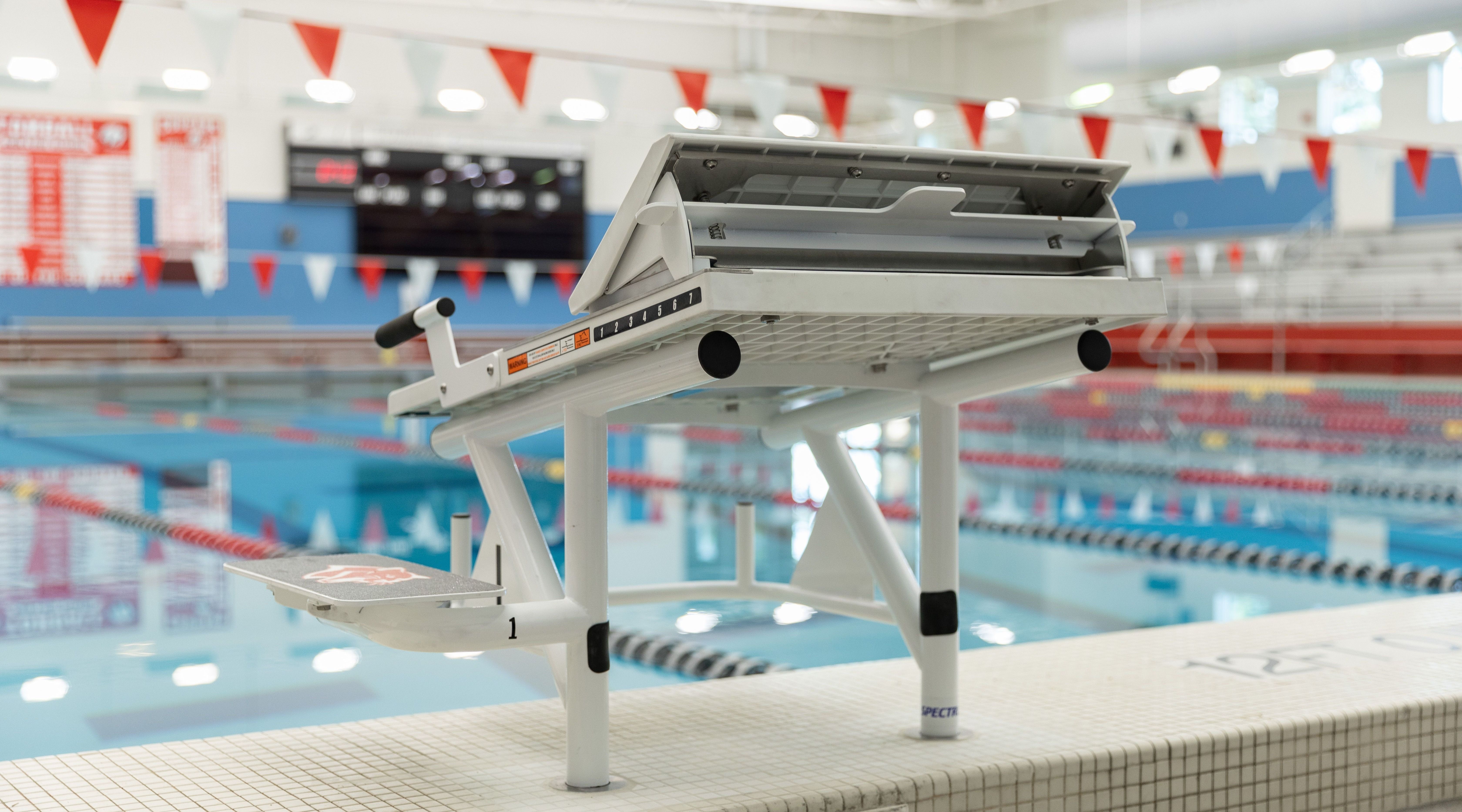
How to Choose Starting Blocks
Date: July 2026
In This Guide
Whether you're building a new competition pool, replacing outdated starting blocks, or researching the latest competitive swimming equipment, this guide explains everything you need to know, from certifications and adjustable wedges to choosing the right starting block for your facility.
You'll learn:
- What competitive swimming starting blocks do
- Why adjustable footrests improve performance
- How to choose the right starting blocks
- World Aquatics, USA Swimming, NCAA, and NFHS requirements
- Common buying mistakes to avoid
- How modern starting blocks improve training and race-day performance
- Why Spectrum Aquatics' Sprint with Rapid Lock™ is changing the industry
- How to maintain your starting blocks
The best competitive swimming starting block is one that is safe, stable, adjustable, easy to maintain, and certified for your level of competition. Modern starting blocks with adjustable wedges help swimmers generate more power off the start while allowing every athlete to customize their preferred setup.
_______________________________________________________________
Choosing the Right Swimming Starting Blocks Starts Here
Choosing the right starting block is a very important decision!
The wrong choice can lead to expensive deck modifications, equipment that doesn't meet competition standards, or starting blocks that begin showing corrosion after only a few seasons.
The right choice, however, gives your swimmers confidence, keeps your facility compliant, minimizes maintenance, and serves your community for decades.
This guide explains everything you need to know, including regulations, measurements, materials, features, installation considerations, and expert recommendations, so you can confidently choose the best swimming starting blocks for your facility.
Quick Guide: Which Starting Blocks Are Right for Your Facility?
Before diving into the details, here's a quick overview.
| If you manage a... | Consider... |
|---|---|
| High School Pool | NFHS-compliant starting blocks with adjustable wedges |
| University Natatorium | NCAA & World Aquatics-compliant competition starting blocks |
| YMCA or Community Recreation Center | Competition starting blocks that can support both meets and recreational programming |
| Municipal Aquatic Center | Durable stainless steel starting blocks designed for high daily use |
| Swim Club Training Facility | Fully adjustable competition starting blocks with track-start wedges |
| New Pool Construction | Custom anchor placement and competition-ready starting blocks |
| Pool Renovation | Retrofit starting blocks compatible with existing anchors |
❇️Expert Tip
If there's even a small chance your facility will host competitive swim meets in the future, purchase competition-compliant starting blocks now. However, Spectrum Aquatics makes upgrading from a platform block to a fully adjustable Sprint with Rapid Lock easy!
What Are Swimming Starting Blocks?
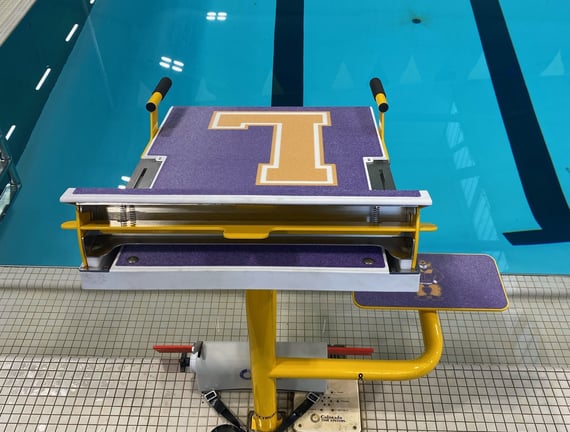
Swimming starting blocks (sometimes called starting platforms) are elevated structures positioned at the starting end of competitive swimming pools. They provide swimmers with a stable, elevated surface for diving starts at the beginning of a race.
Today's starting blocks are far more advanced than the simple concrete or fiberglass blocks of decades past.
Modern competition starting blocks may include:
- Adjustable track-start wedges
- Non-slip platform surfaces
- Backstroke handgrips
- Timing system integration
- Custom branding and lane numbering
- Stainless steel construction for superior durability
These features don't simply improve performance, they also enhance safety, consistency, and compliance for competitive swimming.
_______________________________________________________________
Starting Blocks vs. Starting Platforms: Is There a Difference?
You'll often hear both terms used interchangeably.
Starting Block is the phrase most swimmers, coaches, and facility managers use.
Starting Platform is the more technical term commonly used in construction documents and industry specifications.
Throughout this guide, we'll primarily use swimming starting blocks, while recognizing that both terms describe the same equipment.
_______________________________________________________________
Why Starting Blocks Matter
To spectators, a starting block may seem like a simple piece of pool equipment.
To swimmers, it can make the difference between winning and losing.
A stable platform allows athletes to generate more explosive starts while maintaining proper body position throughout takeoff.
For facility owners, starting blocks influence much more than race performance.
The right equipment helps ensure:
- Athlete safety
- Competition compliance
- Lower maintenance costs
- Long equipment lifespan
- Future flexibility as programs grow
Because starting blocks remain exposed to chlorinated water, humidity, UV light, and constant use, construction quality directly impacts how well they'll perform over the next 20–30 years.
_______________________________________________________________
Understanding Swimming Starting Block Regulations
Before choosing any starting block, determine which governing organizations your facility must satisfy. Different organizations establish equipment standards for sanctioned competitions, and purchasing compliant starting blocks now can save substantial costs later.
World Aquatics Requirements
World Aquatics establishes international standards for competitive swimming equipment.
Current requirements include:
- Platform height between 20 and 29.5 inches above the water
- Minimum platform size of 20 inches by 20 inches
- Backstroke grips
- Non-slip platform surface
- Minimum water depth requirements beneath the starting block
These standards are used for international competitions and heavily influence other governing bodies.
USA Swimming Standards
USA Swimming largely follows World Aquatics specifications while allowing certain differences for short-course competition.
Facilities hosting USA Swimming events should ensure their starting blocks provide:
- Adjustable track-start wedges
- Competition-compliant dimensions
- Proper backstroke grip placement
- Compatibility with electronic timing systems when required
Because many local and regional meets follow USA Swimming rules, choosing compliant equipment provides flexibility for future programming.
NCAA Requirements
Collegiate swimming programs require starting blocks that satisfy NCAA competition standards.
For universities, reaction time matters.
Modern NCAA facilities increasingly choose starting blocks featuring:
- Adjustable wedges
- Integrated timing compatibility
- Exceptional platform stability
- Consistent footing across every lane
These features help athletes train under the same conditions they'll experience during championship competition.
NFHS Standards
High school pools often serve many different users throughout the year.
A single facility may host:
- Swim teams
- Physical education classes
- Learn-to-swim lessons
- Community recreation
- Water fitness
NFHS regulations allow starting blocks up to 30 inches above the water while emphasizing safe water depths and appropriate installation practices.
For many schools, removable or retrofit-friendly starting blocks provide additional flexibility.
_______________________________________________________________
Do You Really Need Competition Starting Blocks?
One of the most common questions facility owners ask is:
"Do we really need competition-grade starting blocks?"
The answer depends on where you see your aquatic program in five or ten years, not just today.
Even if your facility currently hosts only local swim lessons or club practices, installing competition-ready starting blocks prepares you for:
- High school meets
- Club competitions
- Invitational events
- Collegiate training
- Masters swimming
- Future renovations
Replacing recreational equipment later often costs substantially more than installing competition-ready equipment from the beginning. However, thanks to our retrofitting capabilities, replacing the entire starting block is definitely something we can do, but it will come at a higher cost then buying the correct starting block from the beginning.
_______________________________________________________________
Choosing Quality Now Saves Money Later
Swimming starting blocks are a long-term investment. Unlike lane lines or rescue equipment, starting blocks are expected to remain in service for decades.
That's why experienced aquatic professionals look beyond purchase price and evaluate:
- Structural durability
- Corrosion resistance
- Manufacturing quality
- Ease of maintenance
- Future compatibility
- Warranty support
A well-built stainless steel starting block may remain in service for 20 years or more with proper maintenance, making it one of the best long-term investments in a competitive aquatic facility.
_______________________________________________________________
How to Measure Your Pool for Swimming Starting Blocks
Sprint with Rapid Lock Measuring Guide
Selecting the right swimming starting block starts long before you compare manufacturers or features. It begins with understanding your pool.
Every aquatic facility is different. Water depth, deck construction, gutter design, and existing anchor locations all influence which starting blocks will fit properly and comply with competition standards.
Taking accurate measurements now can prevent expensive installation issues later.
The Three Most Important Measurements
Before purchasing starting blocks, determine these three measurements:
-
1. Water Depth
-
Water depth is the most important safety consideration.
-
Different governing bodies establish minimum depth requirements beneath starting blocks to help ensure safe racing dives.
-
Generally speaking:
-
| Water Depth | Typical Recommendation |
|---|---|
| Less than 4 feet | Limited applications depending on governing body requirements |
| 4–4.5 feet | Limited applications depending on governing body requirements. |
| 5–6 feet | Suitable for many competitive installations. |
| 6+ feet | Ideal for most competition starting blocks. |
Always verify the specific requirements of the governing organizations governing your facility before purchasing equipment.
-
2. Deck-to-Water Distance
-
Next, measure the distance from the finished deck surface to the normal operating water level.
-
This measurement determines the overall column height of the starting block.
-
Although manufacturers offer standard sizes, many commercial projects benefit from custom-engineered starting blocks designed specifically for the pool.
-
-
3. Setback from the Pool Wall
-
Setback refers to the horizontal distance from the pool wall to the center of the starting block anchor.
-
This measurement must account for:
- Overflow gutters
- Coping
- Surge systems
- Deck drains
- Existing anchor sleeves
- Pool edge configuration
-
Even small measurement errors can affect swimmer positioning and installation.
❇️Expert Tip
Don't assume your existing starting blocks were installed correctly.
Many renovation projects reveal older equipment that no longer meets today's competition standards or was installed using outdated dimensions. Measuring your pool before ordering new starting blocks helps avoid costly surprises during installation.
_______________________________________________________________
New Construction vs. Pool Renovation
The process of selecting starting blocks looks different depending on whether you're building a new pool or upgrading an existing one.
New Construction
New construction provides maximum flexibility.
Architects and aquatic consultants can locate anchor sleeves exactly where they're needed while the concrete deck is being poured.
This allows starting blocks to be positioned for ideal swimmer alignment, competition compliance, and future equipment upgrades.
Existing Pools
Renovation projects often involve existing anchor sleeves that were installed years, or even decades, ago.
Completely replacing the deck is expensive and disruptive.
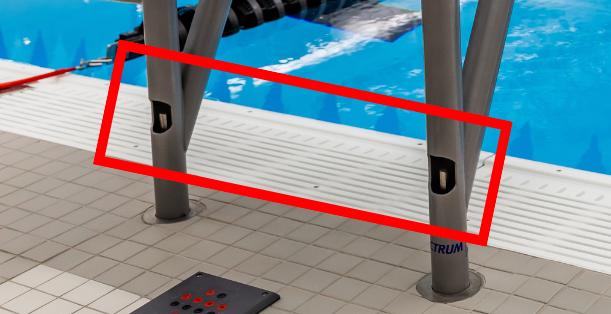
Fortunately, many commercial starting blocks can be designed to work with existing anchor locations, eliminating the need for major demolition. For facility owners, retrofit-compatible starting blocks can dramatically reduce installation costs while minimizing pool downtime.
Spectrum Aquatics Retrofit and Expansion Post Anchors are design to keep you from ripping up your pool deck!
Competition vs. Recreational Starting Blocks
Not every facility needs Olympic-level equipment, but many facilities benefit from competition-ready starting blocks, even if they don't currently host sanctioned meets.
Recreational Starting Blocks 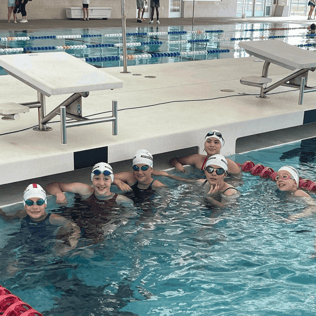
Recreational starting blocks are commonly used for:
- Swim lessons
- Community recreation
- Training
- Camp programs
- Youth development
They typically feature:
- Fixed designs
- Simpler construction
- Lower initial cost
- Fewer or no adjustment options
For facilities focused primarily on recreational programming, these models can be an excellent solution.
Competition Starting Blocks 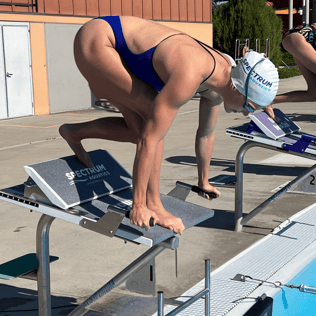
Competition starting blocks are engineered for performance and versatility.
Typical features include:
- Adjustable track-start wedges
- Adjustable backstroke grips
- Superior rigidity
- Premium non-slip surfaces
- Timing system compatibility
- Greater customization
These starting blocks satisfy the needs of:
- High schools
- Universities
- Swim clubs
- Municipal competition pools
- Elite training facilities
Even if your facility only hosts a few meets each year, competition-ready starting blocks often provide the greatest long-term value because they can accommodate virtually every type of programming.
_______________________________________________________________
Single-Post vs. Dual-Post Starting Blocks
Another important decision is selecting between single-post and dual-post starting blocks. Both designs perform exceptionally well when properly engineered. The best choice depends on your facility's goals, deck configuration, and personal preference.
Single-Post Starting Blocks 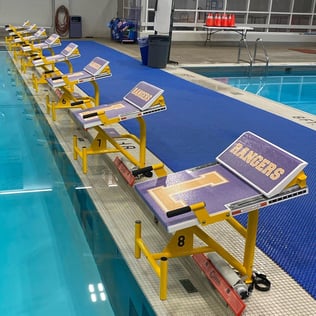
Single-post designs use one central support beneath the platform.
Benefits include:
- Clean, modern appearance
- Easier deck cleaning
- Less visual obstruction
- Simpler installation in many applications
- Reduced deck penetration
Advances in engineering have also made modern single-post designs remarkably stable.
Dual-Post Starting Blocks 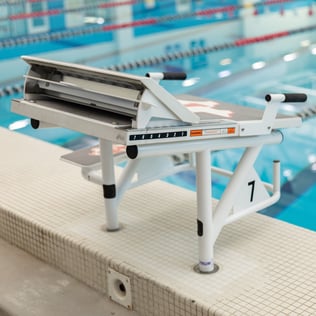
Dual-post starting blocks distribute weight across two support columns.
Benefits include:
- Extremely rigid construction
- Familiar appearance
- Excellent stability
- Ideal for many retrofit projects
- Common in collegiate facilities
Many older competition pools were originally designed around dual-post systems, making them a natural fit during renovations.
Which Is Better?
There isn't a universal answer. The right solution depends on:
- Existing anchors
- Facility aesthetics
- Budget
- Programming
- Engineer recommendations
An experienced aquatic equipment manufacturer can help determine which option best fits your project.
_______________________________________________________________
What Makes a High-Quality Swimming Starting Block?
At first glance, many starting blocks appear similar.
The biggest differences are often hidden beneath the surface.
The quality of the materials, manufacturing process, and finishing techniques determine whether a starting block will still look and perform like new 20 years from now.
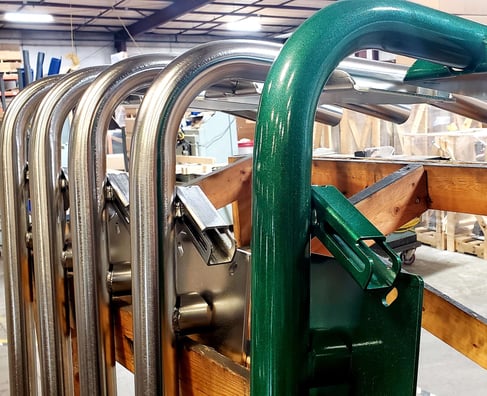
Stainless Steel Matters
Commercial swimming pools create one of the harshest environments for metal equipment. Chloramines, humidity, UV exposure, and constant water contact all accelerate corrosion. That's why premium commercial starting blocks are typically manufactured from stainless steel.
However, not all stainless steel is created equal.
The quality of the raw material, welding process, and finishing techniques all affect long-term durability.
Why Surface Finish Is So Important
Many people assume corrosion begins because stainless steel is "bad." In reality, corrosion often starts where contaminants become trapped during manufacturing.
Premium commercial manufacturers remove these microscopic contaminants through advanced finishing processes.
For example, Spectrum Aquatics' 3-Step Stainless Steel Protection Process includes:
-
-
Electropolishing
-
Electropolishing smooths the stainless steel surface by removing microscopic imperfections left behind during fabrication.
-
The result is a cleaner, brighter finish that is easier to maintain and provides fewer places for contaminants to accumulate.
-
-
Passivation
-
Passivation strengthens the naturally protective chromium-rich surface of stainless steel. This process significantly improves corrosion resistance in harsh aquatic environments.
-
-
Spectra-Shield®
-
Spectrum Aquatics goes one step further by applying Spectra Shield®, a proprietary protective treatment designed specifically for commercial aquatic environments.
-
This additional layer of protection helps stainless steel better resist moisture, chloramines, and other aggressive conditions commonly found around indoor and outdoor pools.
-
For aquatic facilities investing in equipment expected to last decades, these finishing processes can have a meaningful impact on long-term appearance and maintenance requirements.
-
-
American-Made Materials
Another factor many buyers overlook is where the stainless steel originates.
High-quality American-made stainless steel provides consistent material properties and quality control throughout manufacturing. Combined with precision fabrication and experienced craftsmanship, it helps produce starting blocks capable of performing reliably for years under demanding commercial use.
Why Manufacturing Quality Matters
The best starting blocks aren't simply assembled. They're carefully engineered.
Precision welding, tight manufacturing tolerances, and consistent quality control contribute to:
- Better structural rigidity
- Improved appearance
- Easier installation
- Longer service life
- Greater long-term reliability
Many of the most durable commercial starting blocks are still in service decades after installation because they were built correctly from the beginning.
_______________________________________________________________
Why Adjustable Wedges Have Changed Competitive Swimming
Perhaps no innovation has transformed racing starts more than the adjustable track-start wedge.
Today's swimmers generate significantly more power by positioning one foot on an angled wedge behind the lead foot.
This allows:
- Faster reaction times
- More explosive starts
- Better balance
- Greater consistency
- Improved confidence
Because every swimmer has different preferences, adjustability has become essential.
_______________________________________________________________
Why Rapid Lock™ Changes the Game
Traditional wedge adjustment systems often rely on pins, cables, or complicated hardware.
Over time, those systems can wear, stretch, or require additional maintenance.
Our Sprint with Rapid Lock™ Starting Block was developed to simplify that process.
Instead of wrestling with pins or cables, swimmers can quickly reposition the wedge using an intuitive locking mechanism that makes adjustments faster, easier, and more secure.
For coaches, this means less time adjusting equipment between practices.
For swimmers, it means consistent wedge positioning from one workout, or race, to the next.
.png?width=544&height=306&name=Katharine%20Sprint%20Quote%20(1).png)
Why This Matters
Traditional starting blocks often require:
- Pulling pins
- Managing cables
- Aligning holes
- Reinstalling hardware
Sprint simplifies the process:
- Faster practices
- Faster meets
- Less maintenance
- Fewer moving parts
- No pins
- More reliable adjustments
❇️Expert Tip
Sprint™ was designed after listening to coaches, officials, and swimmers who wanted one thing:
A better way to adjust the wedge.
Rapid Lock™ solves one of the biggest frustrations in competitive swimming.
In many races, the difference between first and fourth place is measured in hundredths of a second. The start is one of the few moments where swimmers can gain an immediate advantage before even taking a stroke.
-
For coaches, that means more efficient practices.
-
For athletes, it means greater confidence.
-
For facility owners, it means investing in equipment that will serve thousands of swimmers.
Choosing the right starting block isn't just purchasing pool equipment—it's investing in better performance, safer competition, and a better experience for every swimmer who steps onto the platform.
Quick Decision Guide:
| If you are... | Recommended Solution |
|---|---|
| Building a new competition pool | Install World Aquatics-approved starting blocks |
| Replacing aging blocks | Upgrade to modern adjustable wedge technology |
| Looking for less maintenance | Choose stainless steel with simplified adjustment systems |
| Hosting championship meets | Select blocks certified for USA Swimming, NCAA, NFHS, and World Aquatics |
| Training swimmers daily | Choose blocks that adjust quickly between athletes |
Do Starting Blocks Really Improve Performance?
Yes!
While equipment alone won't replace training, modern starting blocks help swimmers perform more consistently by providing better stability, adjustability, and body positioning.
Why This Matters
Elite swimming is measured in fractions of a second. Removing unnecessary variables helps athletes focus on execution instead of equipment.
What Coaches Appreciate
Many coaches report that athletes quickly develop favorite wedge positions.
Because Sprint™ adjusts so easily, swimmers can consistently recreate those positions every practice.
Consistency builds confidence. Confidence builds faster starts.
Myth vs. Fact
| Myth | Fact |
|---|---|
| All starting blocks perform the same. | Platform design, wedge adjustment, and stability make a significant difference. |
| Adjustable wedges only benefit elite swimmers. | Swimmers of every age benefit from proper positioning. |
| Older blocks are "good enough." | Modern designs improve usability, maintenance, and athlete experience. |
| More moving parts make better equipment. | Simpler systems are often more reliable and easier to maintain. |
| Price should be the deciding factor. | Lifetime value, durability, and service matter far more. |
Did You Know? 💡
Many of today's competitive swimmers train on adjustable wedge starting blocks from a young age, making modern block technology an expectation, not a luxury, when they compete.
Facilities with outdated equipment may unintentionally create an inconsistent training experience.
Ask Yourself...
Before purchasing starting blocks, ask:
- What level of competition will our pool host?
- How many swimmers will use these every day?
- Will coaches be adjusting wedges constantly?
- How important is maintenance?
- Can our existing bases be upgraded?
- Are we future-proofing our investment?
❇️Expert Tip
If your current starting block bases are still in good condition, you may not need to replace the entire system.
Sprint™ Starting Block Tops can retrofit onto many existing bases, providing modern performance while reducing renovation costs.
Common Mistakes to Avoid
| Common Mistake | Why It's a Problem | Better Approach |
|---|---|---|
| Buying based only on price | Lower-cost starting blocks often lead to higher maintenance costs and a shorter lifespan. | Consider the total cost of ownership, including durability, maintenance, and replacement parts. |
| Ignoring competition certifications | Your facility may not meet the requirements for the meets you plan to host. | Choose starting blocks certified for the organizations you serve, such as World Aquatics, USA Swimming, NCAA, or NFHS. |
| Choosing complicated wedge adjustment systems | Slow or difficult adjustments waste valuable practice time and frustrate swimmers. | Look for a simple, intuitive adjustment system that athletes can operate quickly and confidently. |
| Overlooking long-term maintenance | Complex systems with more moving parts can require more repairs and downtime. | Select durable stainless-steel equipment with a proven reputation for reliability and easy maintenance. |
| Forgetting retrofit opportunities | Replacing the entire starting block system may cost more than necessary. | Ask whether modern starting block tops can retrofit onto your existing bases. |
| Buying for today's needs instead of tomorrow's | Your facility may outgrow the equipment as programs and competitions expand. | Invest in starting blocks that can support future growth and higher levels of competition. |
Starting Block Buying Checklist
Before purchasing new starting blocks, use this checklist to ensure you're selecting equipment built for long-term performance, safety, and competition.
| Feature to Look For | Why It Matters |
|---|---|
| Adjustable Footrest (Wedge) | Allows swimmers of all sizes and skill levels to find their optimal starting position for more powerful, consistent starts. |
| Quick Wedge Adjustment | Saves valuable practice and meet time by making it fast and easy to reposition the footrest between swimmers. |
| Stainless Steel Construction | Provides exceptional strength, corrosion resistance, and decades of reliable performance in harsh aquatic environments. |
| Durable Non-Slip Platform | Gives swimmers secure footing and confidence during every race start, even when surfaces are wet. |
| World Aquatics Compliance (when required) | Ensures the starting blocks meet international standards for sanctioned competitions. |
| USA Swimming Compatibility | Allows your facility to host USA Swimming events with confidence. |
| NCAA Compatibility | Supports collegiate competitions and meets NCAA equipment requirements. |
| NFHS Compatibility | Ensures your facility is ready for high school swim meets and championships. |
| Long-Term Replacement Parts Availability | Protects your investment by ensuring replacement components remain available for years to come. |
| Trusted Manufacturer Support | Provides peace of mind with expert assistance, technical support, warranty service, and product knowledge when you need it most. |
Maintaining Swimming Starting Blocks
One advantage of high-quality commercial starting blocks is that they require relatively little maintenance. A simple preventive maintenance routine helps maximize both safety and lifespan.
Spectrum's Starting Block Maintenance Kit
-
Weekly
- Rinse away chemical residue and debris.
- Inspect non-slip surfaces.
- Wipe down visible stainless steel.
-
Monthly
-
Check anchor hardware.
- Verify wedge adjustment mechanisms operate smoothly.
- Inspect grips and platform surfaces.
-
-
Annually
- Perform a detailed inspection.
-
Replace worn components if needed.
- Touch up powder-coated finishes if damaged.
- Review manufacturer maintenance recommendations.
With proper care, premium stainless steel starting blocks can provide reliable performance for 20 years or more.
_______________________________________________________________
Why Aquatic Professionals Choose Spectrum Aquatics
For more than 50 years, Spectrum Aquatics has partnered with architects, aquatic consultants, swim coaches, universities, municipalities, and facility managers to design equipment that performs reliably in some of the harshest commercial environments.
Every project begins by understanding the unique needs of the facility, not by recommending a one-size-fits-all solution.
Spectrum's competition starting blocks are manufactured in Missoula, Montana using premium American-made stainless steel and are engineered for long-term performance, athlete confidence, and simplified maintenance.
What sets Spectrum Aquatics apart includes:
- American-made stainless steel
- Precision craftsmanship from experienced fabricators
- The exclusive 3-Step Stainless Steel Protection Process, including Electropolishing, Passivation, and Spectra Shield®
- Rapid Lock™ wedge adjustment for fast, tool-free positioning
- Custom powder coating in virtually any RAL color
- Personalized logos and branding
- Detailed project-specific submittal drawings
- Retrofit solutions that can often utilize existing anchors
- A knowledgeable team that supports projects from design through installation
Whether you're building a championship natatorium, upgrading a high school pool, or renovating a community aquatic center, Spectrum Aquatics works alongside your team to help create a facility that serves athletes and communities for decades.
_______________________________________________________________
Frequently Asked Questions
-
Are adjustable starting blocks required?
-
Not always, but they have become the standard for competitive swimming because they improve consistency and accommodate swimmers of different sizes and techniques.
-
-
How long do stainless steel starting blocks last?
-
With proper care and maintenance, high-quality stainless steel starting blocks can provide decades of reliable performance.
-
-
Can starting blocks be retrofitted?
-
Often, yes. Many existing installations can be upgraded with new starting block tops instead of replacing the entire system, depending on the original base.
-
-
What certifications should I look for?
-
Facilities hosting competitive events should verify compatibility with organizations such as World Aquatics, USA Swimming, NCAA, and NFHS based on the competitions they plan to host.
-
-
Why is wedge adjustment so important?
-
The rear footrest helps swimmers generate explosive power during the start. Quick, repeatable adjustment allows each swimmer to find their ideal position in seconds.
-
-
Are Sprint™ Starting Blocks customizable?
-
Yes. Sprint™ Starting Blocks can be customized with team logos, sponsor logos, and powder-coated colors to match your school's branding or facility design.
-
_______________________________________________________________
Key Takeaways
- Modern starting blocks improve starts, confidence, and consistency.
- Adjustable footrests create faster, more repeatable starts.
- Facilities should choose starting blocks based on their level of competition, not simply the lowest price.
- Durable stainless-steel construction dramatically reduces maintenance.
- Easy wedge adjustment saves valuable practice and meet time.
- Sprint with Rapid Lock™ eliminates cables and pins for the fastest wedge adjustment available.
Still Have Questions?
Whether you're building a new competition pool, replacing aging equipment, or planning your next aquatic facility, choosing the right starting blocks is one of the most important decisions you'll make.
The team at Spectrum Aquatics has worked with world-class venues, universities, high schools, community recreation centers, and swim clubs across North America to help select starting blocks that fit each facility's goals, budget, and level of competition.
We're happy to answer questions about certifications, retrofits, customization, installation, or selecting the right starting block for your swimmers.
